
The Seven Deadly Sins of Measurement
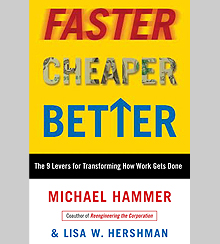
 Jim Champy, coauthor, with Harry Greenspun, of Reengineering Health Care: A Manifesto for Radically Rethinking Health Care Delivery, introduces a lesson on the pitfalls of measurement from Faster, Cheaper, Better: The 9 Levers for Transforming How Work Gets Done, by Michael Hammer and Lisa W. Hershman.
The late Mike Hammer always delivered the unexpected in a strong voice with an intelligent edge that woke you up. When we coauthored Reengineering the Corporation, I discovered that no partner could have been more insightful, more probing into the behaviors of companies and their managers. Mike also had a great talent for metaphor. He said that inefficiencies were like fat marbled into a piece of meat, and that to get costs out you had to grind up the company and fry out the fat. That metaphor never made it into our first book. I told Mike that executives wouldn’t respond well to the notion of treating their companies so brutally.
But that didn’t stop Mike from being a radical thinker, always challenging the way things are done. He disdained the notion “if it ain’t broke, don’t fix it.” In this excerpt, from the book that Mike was working on before his untimely death at age 60 in 2008 (a work completed by his colleague Lisa W. Hershman), you will see that even things that look right can be wrong. Read it several times to grasp everything that’s here on how managers misuse metrics and measurement processes — sometimes unwittingly, sometimes purposely to deceive. It’s quintessential Hammer.
In the sixth century Pope Gregory the Great formulated his famous list of the seven deadly sins — gluttony, greed, wrath, lust, sloth, envy, and pride. There are also seven sins of corporate measurement. Gregory’s list was meant to help an individual’s quest for salvation. Ours is more mundane: saving companies from fatal flaws in performance measurement...
But that didn’t stop Mike from being a radical thinker, always challenging the way things are done. He disdained the notion “if it ain’t broke, don’t fix it.” In this excerpt, from the book that Mike was working on before his untimely death at age 60 in 2008 (a work completed by his colleague Lisa W. Hershman), you will see that even things that look right can be wrong. Read it several times to grasp everything that’s here on how managers misuse metrics and measurement processes — sometimes unwittingly, sometimes purposely to deceive. It’s quintessential Hammer.
— Jim Champy
Excerpted from Chapter 2 of Faster, Cheaper, Better:
The 9 Levers for Transforming How Work Gets Done
The 9 Levers for Transforming How Work Gets Done
In the sixth century Pope Gregory the Great formulated his famous list of the seven deadly sins — gluttony, greed, wrath, lust, sloth, envy, and pride. There are also seven sins of corporate measurement. Gregory’s list was meant to help an individual’s quest for salvation. Ours is more mundane: saving companies from fatal flaws in performance measurement...


