Showing posts with label leadership. Show all posts

20101220

Leadership Books


O2ibm
Visit this group

Are you a good leader? Take this Leadership Test


Leadership Self Examination

If you’re looking to benchmark your leadership ability the following self examination by Mike Myatt, Chief Strategy Officer, N2growth will give you a baseline to build from. While this test is not as detailed as more comprehensive assessments, I have nonetheless found it to be fairly thorough. That said, any self exam is only as good as the honesty of those taking the test. If you check your ego at the door and give a thoughtful, introspective evaluation of your ability, it is likely that you’ll learn something about your leadership abilities or lack thereof. Better yet, for those of you bold enough to place yourself under what might be the harsh scrutiny of others, you can get the benefits of a mini leadeship 360 review by asking your co-workers to rate you as a leader. If you’re game to test your leadership ability read on to take the exam…
The examination is broken down into 10 sections, each worth 10 points. If you believe you possess a fully developed competency in a section give yourself 10 points. If you possess no competency whatsoever give yourself 0 points. Grade your examination as follows:
  • 90 – 100 points = A
  • 80 – 89 points   = B
  • 70 – 79 points   = C
  • 60 – 69 points   = D
  • 59 & below        = F
As I mentioned above, use the results of the exam to determine your strengths and weaknesses as a leader. If you find that you lack skill sets and competencies in certain areas seek out mentors and coaches to shore-up your weaknesses, and more importantly, use your professional advisors to assist you in leveraging your strengths. On with the exam….


20100811

Thinking Ahead Visions: The Leadership Circle


“Leaders get the best out of followers and followers get the best out of leaders,” says Manfred Kets De Vries, Clinical Professor of Leadership Development at INSEAD. The connection between leaders and their staff is only one of many circular connections he sees.
The challenge for leaders multiplies as organisations get bigger and as globalisation makes companies more diverse and more virtual.  “It’s very hard to manage large organisations, things become so enormous,” he said in an interview with INSEAD Knowledge.
Another circular challenge for leaders is to keep an organisation growing over generations. “To me, the real test of a leader is how well his or her successor does, and very few leaders pass that test,” he says.
Leaders have to help people re-invent their organisations. Kets De Vries imagines this as an ancient mythical serpent that swallows its tail but is constantly reborn in a circular connection.
To complete that circle, leaders are required to leverage their vision and their skills to create sustainable, results-oriented organisations. He believes group or team coaching is one of the most effective ways of achieving that long-term success. 

What the Experts Say: Four Things Leaders Can't Give


Four Things Groups Want that Leaders Can't Give — and One They Can

Rosabeth Moss Kanter, a professor at Harvard Business School and the author of Confidence and SuperCorp in this excellent article contests that emerging group experiences have predictable dynamics, whether they are new project teams, training and development programs, wilderness experiences, or just people learning new jobs. People form relationships based on first impressions and sometimes-false hopes, find that things haven't gone as imagined, and then struggle through confusion and misunderstanding to create their own positive norms that help them work effectively. The best leaders help people through these stages only to find some common issues popping up — things people seem to want that even the best leaders can't provide.
Anticipating these dilemmas makes it easier to resolve them. Here are four desires that are almost impossible to satisfy:


What the Experts Say: Skills for Tomorrow's Leaders


Skills for Tomorrow's Leaders


In this symposium at the Harvard Business School, expert thinkers gathered to investigate what is necessary today to develop the leaders we need for tomorrow.
Featuring:
Angel Cabrera, President, Thunderbird School of Management
Bill George, Professor, Harvard Business School and former Chairman and Chief Executive Officer of Medtronic
Daisy Wademan Dowling, Executive Director, Leadership Development at Morgan Stanley
Andy Zelleke, Lecturer in Public Policy, Harvard Kennedy School
Batia Mishan Wiesenfeld, Professor, Leonard N. Stern School of Business, NYU
Evan Wittenberg, Head of Global Leadership Development, Google, Inc.
Dr. Ellen Langer, Professor, Harvard University
Scott Snook, Associate Professor, Harvard Business School and retired Colonel, US Army Corps of Engineers
 

O2ibm Visit this Open Forum

Actionable Insight: Find out How LG Electronics reinvented itself in the US


How LG Electronics reinvented itself in the States

Since 2002, Korean electronics giant LG Electronics struggled to launch its brand in the US market. Five years later, it became the top seller of refrigerators and washing machines, and has since been successfully maintaining its lead in the two home appliance categories with current respective market shares of about 24 per cent.
LG achieved annual revenue growth of 20 per cent in the Americas, rising to more than $13 billion from $5.6 billion under the leadership of Michael Ahn, a former president and CEO of LGE Americas. Ahn, who’s currently a senior adviser to the company, tells INSEAD Knowledge in an interview that it took a long time for LGE to gain public acceptance of its products as premium products. Even securing national distributors was fraught with difficulties...


20100810

What kind of Leaders We Need Now?

Google Groups
O2ibm
Visit this group

In an increasingly uncertain business environment, leaders are facing new unpredictable challenges. The executive skills that were most important - setting direction, controlling performance, call for a refresh and a new leadership style that can foster innovation and inclusion in the face of the unexpected.

What kind of development programs can best prepare this next group of leaders?

Leadershp expert Tammy Erickson discussed the opportunities and challenges for "Leaders We Need Next."

View HBR webinar: A conversation with Tamara Erickson, author of Retire Retirement, What's Next, Gen X and Plugged In: The Generation Y Guide to Work
 

Seizing the Upside of Complexity

Google Groups
O2ibm
Visit this group

For Chief Executive Officers, change has long been a pressing challenge. Organizations now operate in a world that is substantially more volatile, uncertain, and complex.
A new global survey of 1500 CEOS found that these executives expect even greater complexity ahead - but fewer than half believe their organizations are equipped to manage it.
How do these leaders ensure that their organizations not only survive, but thrive in this increasingly uncertain economic environment?
How can CEOs embrace ambiguity, take risks that disrupt legacy business models, and lead organizations into the future?

Hear IBM leaders Saul Berman and Peter Korstner explore the challenges now facing CEOs and the ways that their organizations can capitalize on complexity.


20100805

The Pedigree of Emerging Leaders


Key points for spotting emerging leaders:
  • individuals who consistently deliver ambitious results for the company
  • individuals who consistently demonstrate the ability to grow, adapt, and be more flexible than their other top performing peers
  • individuals who ask for opportunity and expand their capacity of operation and influence
  • individuals who take things to the next level (ie: imagination, creativity, product futures etc)
  • individuals who have strong powers of observation, judgment, reactions that are spot on, and EQ
  • individuals who are clear thinkers and have a point-of-view that may be counter to the trend, and finally
  • individuals who ask questions that are insightful that get the thought process into a creative frenzy.


O2ibm
Visit this group

Thinking Ahead Succession Planning - The Key to future success


"Thinking Ahead"  succession planning enables organizations to takeover new responsibilities in a much faster way and with least disruption in the business activities. 
An article highlights four best practices to ensure effective succession planning that can be implemented in any company - Analysis; Development; Selection and Transition.

Having a structure in place that carefully engages in those best practices will set the new leaders firmly towards future success.

Link to article >


O2ibm >>>  
Visit this Open Forum

20100803

Learning to Lead

Herminia Ibarra , Professor of Organizational Behavior, and Faculty Director of the INSEAD Leadership Initiative, contests that we learn to lead in relationship, by becoming a part of a community and network of leaders, but what we preach, however, is very different.
 

Let's draw some inferences by considering a few schools of thought:

Thinking Ahead as a True Leader


The ability to 'think ahead' and plan a strategy, implies keeping in touch with employee opinions, technological advances and market trends that will help shape your vision - to be shared. 
Leaders, by definition, must have followers that aspire to the leader’s vision. Once you’ve  'thought ahead' into the future, you need to communicate your vision with conviction and confidence, as to inspire, energize and unite your team. A leader must be capable of shaping internal politics that will support performance improvement initiatives.
 
During times of change, uncertainty and fear reign supreme. As a result, leaders confronting strategic and organizational change, have to manage communication effectively. As a leader, you have to portray a compelling vision for the future, while implementing change.  Processes that build a shared vision of the future, create positive coalitions, and allow open expression of competing views will prepare people for the change.
 
Motivating people to peak performance is a must of  leadership. But how can you unleash the full individual emotional commitment and collective potential of your people so that they achieve higher levels of performance? Generating emotional energy and commitment takes time and effort, as to ensure that the right balance between achieving the task, building the team and  sustaining morale.


O2ibm
Visit this group

Post-Recession Ways of Thinking Ahead in Business

  •     Identifying Opportunities & Mobilizing Knowledge Resources: Strategic planning and investment for competitiveness
  •     Creating actionable and achievable plans
  •     Providing ongoing analysis and benchmarking
  •     Aligning Incentives and Investments
  •     Bridging Sustainability and Economic Development: New policies for a changing world
  •     Enterprise Design Coordination - Adaptive Business Processes and Workflows
  •     Dynamic Resource Management
  •     Intelligent Business Decision Support
  •     Event-Driven Planning and Scheduling
  •     Leadership refocused with new strategy and cohesive vision
  •     Strategic plans created for the global marketplace
  •     Supply chains streamlined
  •     Products redefined
  •     New markets targeted
  •     Cost-saving measures developed
  •     Silos leveled & Teams aligned


O2ibm > Learn & Lead
Visit this group

Integrative Leadership: A collaborative model that delivers results
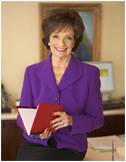


"In the twenty-first century a new vision of leadership is needed more than
ever. Leaders must integrate knowledge and talent from individuals in
the private, not-for-profit, and government sectors to advance the
common good."


Marilyn Carlson Nelson, Chairman Carlson School of Management


Integrative Leadership  = leadership that promotes innovative, responsible, and effective solutions to cross-sector challenges locally, nationally, and globally.

Related Posts with Thumbnails